SPOTIFY
Podcast · External link
The Spear of Destiny — podcast discussion
Hear a discussion of Trevor Ravenscroft’s book on Spotify. The programme is an independent commentary, not an official production of the literary estate.
Listen on Spotify ↗The Holy Lance, its legends and its place in history — explore the books that brought its extraordinary story to generations of readers.
Explore the writing of Trevor Ravenscroft, the story behind the legend, original book covers, archival photographs and contemporary discussions.
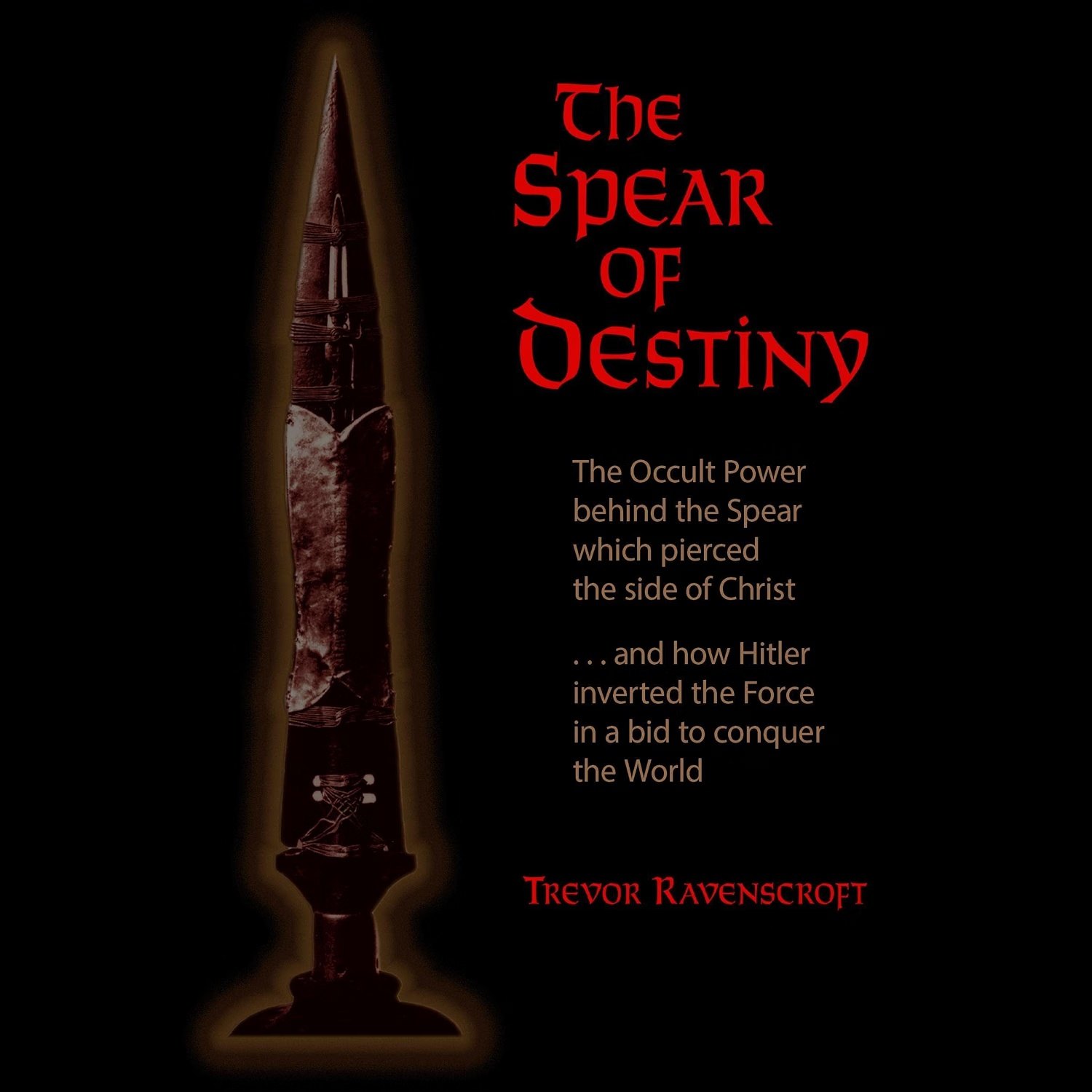 Cover artwork · The Spear of Destiny
First published in 1972, Trevor Ravenscroft's The Spear of Destiny explores the Holy Lance from its sacred traditions and imperial history to the political upheavals of twentieth-century Europe. The book follows a remarkable narrative involving the spear's legend, Adolf Hitler, Nazism and the role of occult ideas in European history. Discover the story in the author's own words and consider its questions for yourself.
Ravenscroft brought together the history of the Holy Lance, spiritual traditions and the lives of influential historical figures in a narrative that has attracted readers for more than fifty years. Explore the books and follow the sources, ideas and questions they present.
Explore a podcast, an independent film trailer and two YouTube programmes examining the Spear of Destiny and its enduring place in popular culture.
Hear a discussion of Trevor Ravenscroft’s book on Spotify. The programme is an independent commentary, not an official production of the literary estate.
Listen on Spotify ↗Watch the independent Nuremberg 1561 trailer, which draws on the extraordinary sky phenomenon recorded in 1561 and the Spear of Destiny theme.
Watch the trailer ↗Explore this programme about Adolf Hitler and the enduring story of the Spear of Destiny.
Watch the video ↗Watch The UnXplained on HISTORY exploring the Spear of Destiny and its traditions of divine power.
Watch on YouTube ↗External media and copyright notice: The linked Spotify podcast, Nuremberg 1561 trailer, YouTube videos and television excerpts are independent third-party productions. Their inclusion is for readers to explore relevant coverage; it does not imply production, sponsorship, endorsement, affiliation or adaptation authorisation by the Trevor Ravenscroft Literary Estate. Video, audio, branding and programme copyrights remain with their respective owners.
Explore the publisher’s editions, find paperbacks and check digital or audio editions. Amazon buttons marked “Find” open title-specific searches rather than a guaranteed product listing.
What lies behind the extraordinary reputation of the Holy Lance? In The Spear of Destiny, Trevor Ravenscroft traces the story of the spear said to have pierced Christ’s side, from sacred tradition and medieval symbolism to the struggle for political power in twentieth-century Europe. The narrative follows the spear through centuries of legend and explores its connection with Adolf Hitler, the rise of Nazism and occult movements. First published in 1972, this is the book that introduced many readers to the enduring mystery of the Spear of Destiny.
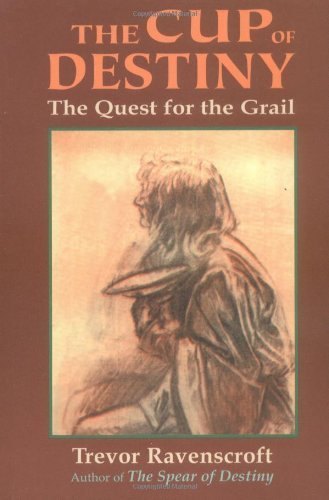
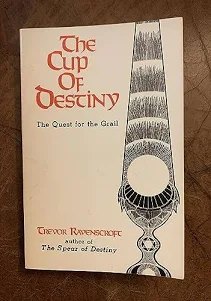
In The Cup of Destiny: The Quest for the Grail, Trevor Ravenscroft turns to the medieval story of Parzival and the enduring mystery of the Holy Grail. Drawing on the Grail tradition, especially the journey of a young knight whose search leads beyond outward achievement, he explores spiritual initiation, self-knowledge and the transformation of human character. The Grail emerges not merely as a precious object to be found, but as the focus of a demanding inner quest. Themes of compassion, responsibility, suffering and renewal give the story its continuing significance. Read alongside The Spear of Destiny, The Cup of Destiny provides a complementary journey: from the pursuit of power in history towards the possibilities of spiritual awakening in the individual.
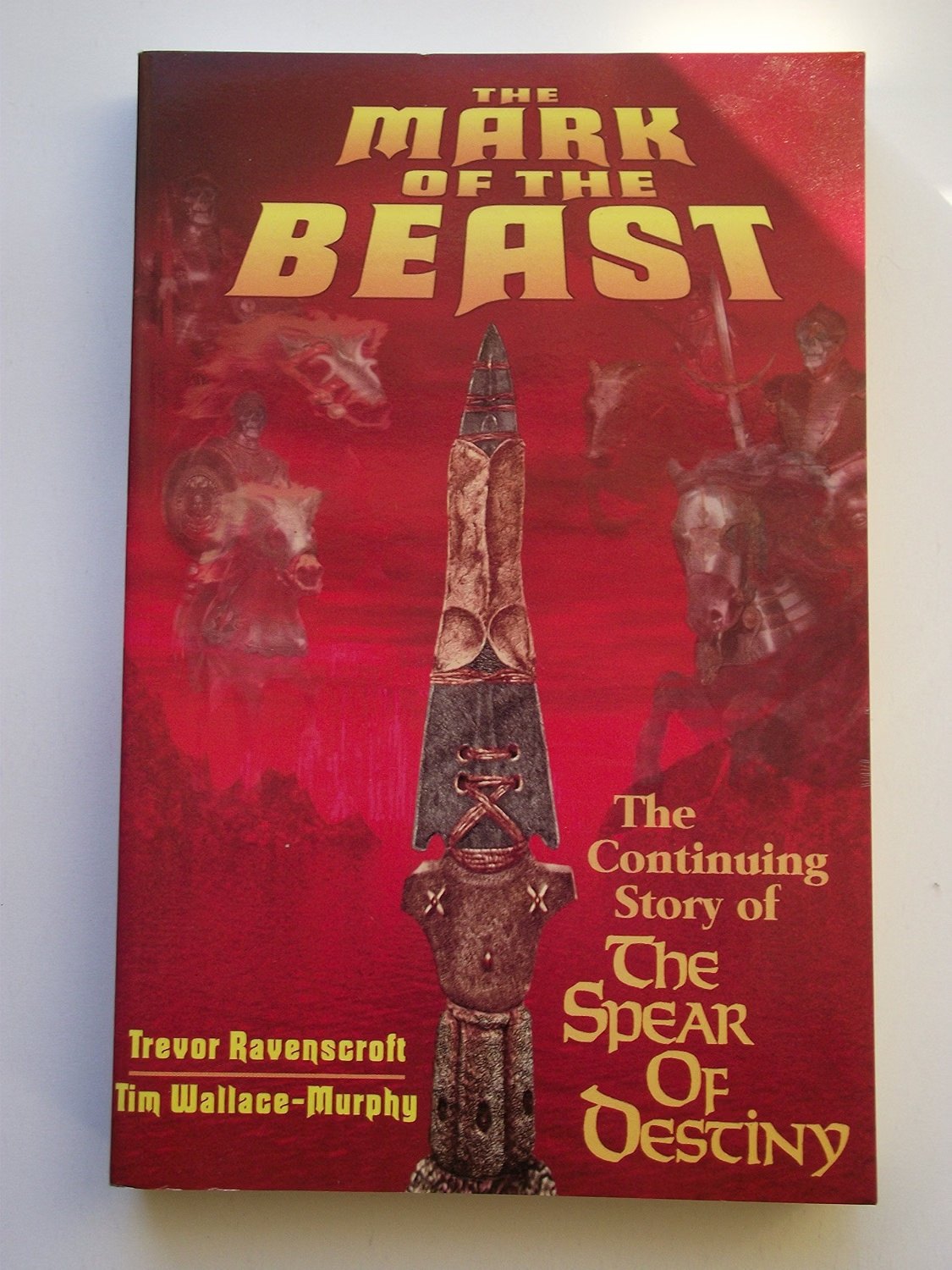
Written jointly by Trevor Ravenscroft and Tim Wallace-Murphy, who collaborated on all aspects of the manuscript, The Mark of the Beast: The Continuing Story of The Spear of Destiny extends their exploration of the Holy Lance into the future of humanity. Alongside the struggle between spiritual freedom and forces seeking to dominate human life, the authors address the influence of Ahriman: a power associated with materialism and the mechanisation of thought and society. Ravenscroft warned of humanity becoming increasingly subordinated to computers and machines, losing individuality and the living dimension of the human soul. In the age of artificial intelligence, pervasive digital systems and automated decision-making, these themes invite new readings of the book. Both authors developed the work together; the Trevor Ravenscroft and Tim Wallace-Murphy estates each hold 50% of its literary rights, according to the estate’s rights account.
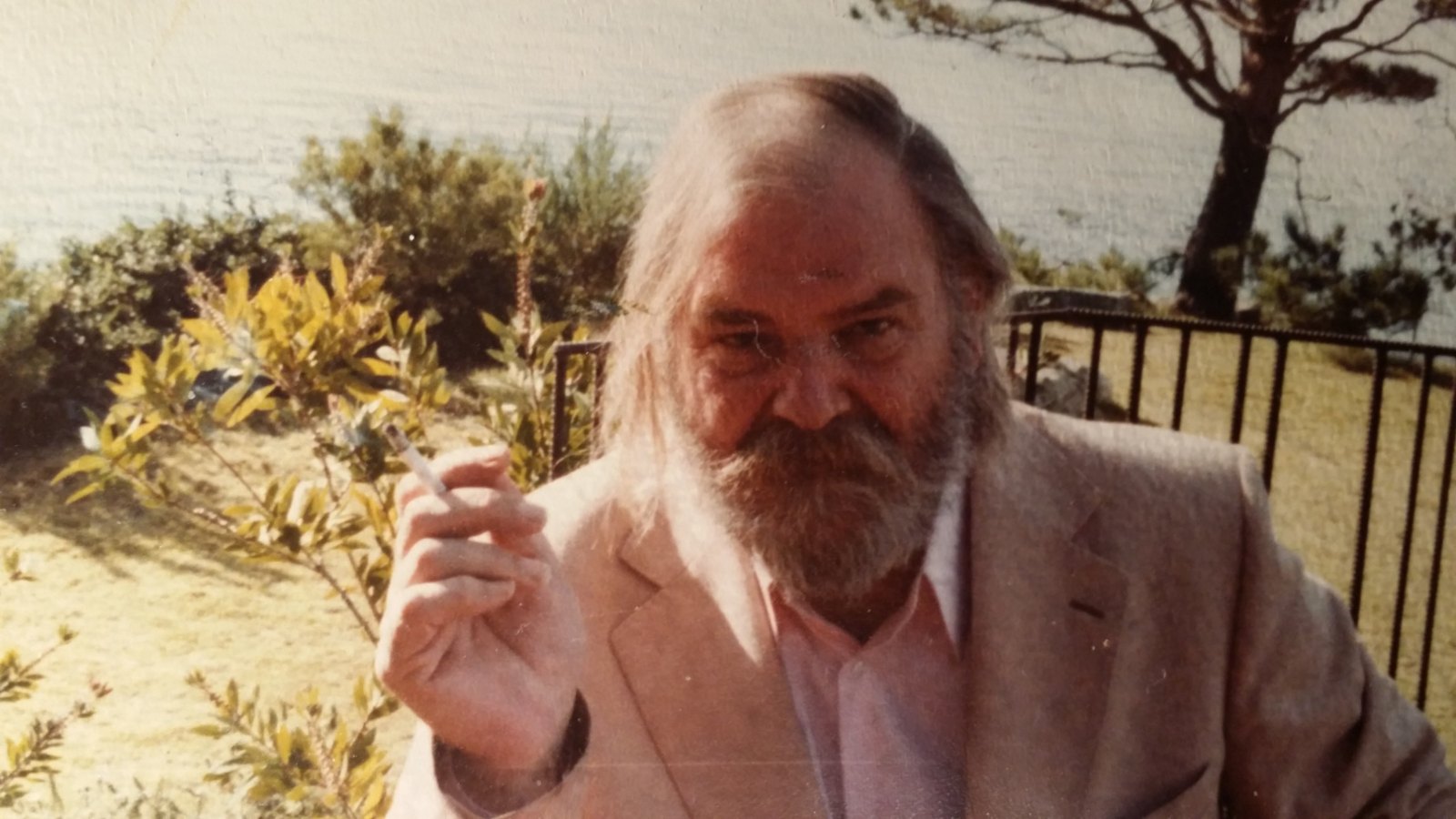
Trevor Ravenscroft (1921–1989) was a British writer, journalist and former commando whose life brought together wartime experiences, historical research and the spiritual traditions of the West. His books examine the Holy Lance, the Holy Grail and the forces shaping human freedom. His three best-known works are The Spear of Destiny, The Cup of Destiny and The Mark of the Beast. The last was written in full collaboration with Tim Wallace-Murphy, who worked with Ravenscroft on all aspects of the manuscript.
His writing continues to reach new readers through print, Kindle and audio editions, historical programmes, podcasts and discussion of the twenty-first century.
Author biography on Amazon ↗ Trevor Ravenscroft Books ↗According to the literary estate’s biographical account, Ravenscroft was educated at Sandhurst and served as a British commando during the Second World War. The estate recounts his capture during an operation associated with Field Marshal Erwin Rommel, years as a prisoner of war, repeated escape attempts and imprisonment in a concentration camp. These episodes shaped the questions about conflict, ideology and human freedom that later occupied his writing.
The estate also describes a twelve-year period of study with Dr Walter Johannes Stein, who had been associated with Rudolf Steiner’s spiritual philosophy, and Ravenscroft’s later work advising members of the Shah of Iran’s family. These biographical details are presented as the estate’s account and can be explored further through the books and archive.
Ravenscroft traces the Holy Lance, traditionally associated with the soldier Longinus, from Christian legend into the courts of rulers and the turmoil of twentieth-century Europe. His narrative examines Hitler’s fascination with the spear and the relationship he perceived between occult thought and the struggle for political power.
The Cup of Destiny follows Parzival through the symbolism of the Holy Grail, drawing out the demands of spiritual initiation, moral choice and the awakening of compassion. Ravenscroft presents the Grail quest as more than a medieval adventure: its challenges reflect an inner journey in which knowledge, suffering and human responsibility contribute to the development of consciousness. The book is a companion to The Spear of Destiny, approaching the struggle for the human spirit through transformation rather than the pursuit of power.
Trevor Ravenscroft and Tim Wallace-Murphy wrote The Mark of the Beast together, collaborating on every part of its manuscript. The book extends the story of the Holy Lance into a vision of humanity’s spiritual future, including the influence of Ahriman, the growing power of mechanisation and the danger of human beings becoming instruments of the machines they create. Both writers are credited with the complete work, which was published after Ravenscroft’s death.
Ahriman is central to the spiritual questions explored by Ravenscroft and Wallace-Murphy. In the framework of Rudolf Steiner’s spiritual philosophy, Ahriman is associated with a calculating, materialistic outlook that threatens to reduce human existence to purely mechanical processes. Ravenscroft described the danger of a future in which mankind serves the computer rather than using technology in the service of human freedom — becoming increasingly machine-like and losing touch with the soul. Today, readers may consider those warnings against the background of artificial intelligence, algorithms and increasingly automated institutions.
The authors’ concerns extend beyond the physical machine to what happens when people relinquish judgement, conscience and spiritual independence. The Mark of the Beast invites readers to explore the relationship between power, technology and the human spirit, and to form their own conclusions about its relevance to the twenty-first century.
The Spear of Destiny has been discussed among the occult and esoteric works associated with David Bowie’s mid-1970s interests and his Station to Station period. The Bowie Book Club has devoted a podcast episode to Ravenscroft’s book. The extent of its direct influence on particular songs remains a matter for biographers and listeners.
Listen to the Bowie Book Club podcast ↗
The Dallas Bono audiobook edition of The Spear of Destiny offers a way to experience the text in spoken form. The author biography supplied by the estate also refers to an archival Australian interview with Ravenscroft; listeners should check the particular audio edition for its included supplementary material.
Select any image to open a larger version. Historical portraits, photographs and book-cover editions supplied for this website.
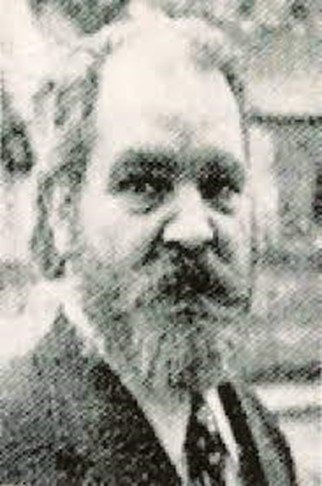
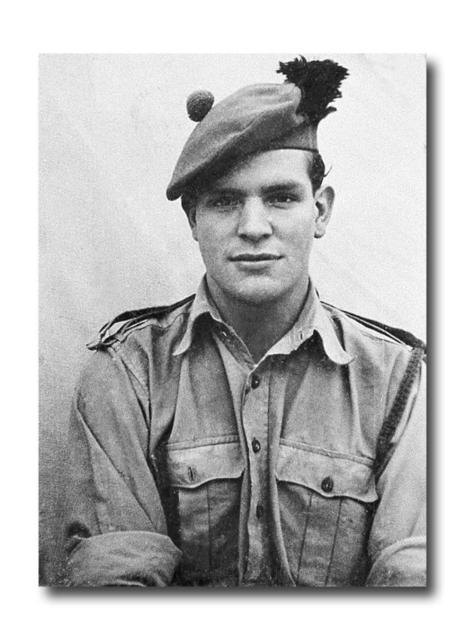
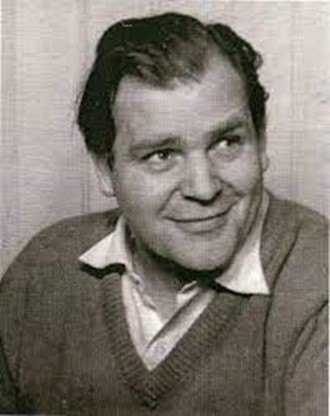
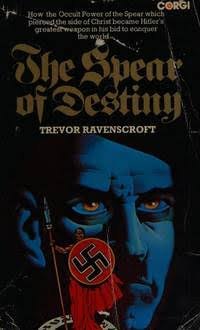
Archive and edition images are presented for identification and literary discussion. Copyright in individual photographs, illustrations, cover designs and translations may belong to their creators, publishers or other rights holders. Please contact the estate regarding image reuse; the estate cannot automatically authorise third-party material.
The Holy Lance preserved among the former imperial regalia in Vienna has inspired centuries of religious, political and spiritual fascination. Explore its history and the extraordinary traditions associated with it.
The 1561 Nuremberg broadsheet records unusual sights reported in the sky. Its striking imagery continues to inspire films, imaginative interpretations and discussions surrounding the Spear of Destiny.
Kunsthistorisches Museum Vienna ↗Ownership of this website. Spearofdestiny.org is an independent website owned and operated by the Trevor Ravenscroft Literary Estate. Original editorial material produced for this website is © 2026 Trevor Ravenscroft Literary Estate, except where otherwise indicated.
According to the literary estate’s rights arrangements, Red Wheel/Weiser handles book publishing, serialisation and audiobook rights for The Spear of Destiny, as well as the foreign publishing rights described below. Film and television rights are not included in those Red Wheel/Weiser rights.
Red Wheel/Weiser publishes The Cup of Destiny and handles foreign publishing rights for the title. Film and television rights are not handled by Red Wheel/Weiser under the estate’s stated arrangements.
The Mark of the Beast was co-written by Trevor Ravenscroft and Tim Wallace-Murphy. The estate states that 50% of the literary rights are owned by the Tim Wallace-Murphy estate, with the other 50% owned by the Trevor Ravenscroft estate. Red Wheel/Weiser publishes the book and handles foreign publishing rights, but not film or television rights.
Rights information on this page describes the literary estate’s understanding of its agreements. Specific uses, territories, editions and permissions remain subject to the executed contracts and any other applicable third-party rights. This page does not itself grant a licence.
For film or television adaptations, documentary participation, dramatisation, rights options, quotations, image licences, archive access, interviews, partnerships or other commercial proposals, please address the enquiry to the Trevor Ravenscroft Literary Estate. Requests concerning The Mark of the Beast may also require the agreement of the Tim Wallace-Murphy estate.
Please include your organisation, the relevant title, intended use, territory, media/platform, proposed term, whether the use is exclusive, and your contact details. For published book editions, serialisation, audiobooks or foreign publishing enquiries, please approach Red Wheel/Weiser as appropriate to the title and agreement.
Business and permissions contact: [email protected]
Original text and website design created for the Trevor Ravenscroft Literary Estate are protected by copyright. Book texts, cover art, photographs, translations, broadcaster identifiers, video footage, podcasts and other third-party material remain subject to the rights of their respective owners. External links are included for reference and do not imply affiliation with, or endorsement by, those third parties.
If you believe material on this site infringes rights you own, please contact the literary estate with the URL, a description of the material and details supporting the claim. The estate will review substantiated notices and, where appropriate, remove or amend the material.
The companion author website presents Trevor Ravenscroft’s three books and the estate’s literary legacy. Commercial rights and permissions should be directed to the appropriate rights holder, according to the title and proposed use.